
Industrial Powder Mixers: Market Trends & Buying Guide
Industrial powder mixers are essential in pharmaceuticals, food, and fine chemicals. The industry is shifting from conventional machines to smarter, integrated systems. The global market may reach $1.5 billion by 2028, growing at a 6.5% CAGR. The reason is simple: manufacturers want higher output, tighter control, and less waste. This is widening the market. Startups look for affordable basic systems, while large companies invest in intelligent, high-precision mixing.
Factory challenges remain clear. Traditional mixing often causes uneven blending, higher contamination risk, and long maintenance downtime. Equipment choice and process design strongly affect line ROI. The Ribbon Mixer, for example, uses strong convection and shear for fine powders, enabling fast mixing of large batches. As producers demand zero clumping and better dispersion, selection is no longer about what works, but what fits best.
A Deep Look at the Global Industrial Powder Mixer Market and Its Real Growth Drivers
By 2026, the industrial powder mixer market is driven not only by mechanical strength, but also by compliance and flexible production. In pharmaceuticals, strict GMP rules are pushing fully hygienic designs. In food processing, dust-free production is now a basic requirement.
Regional Growth Momentum and Shifting Regulatory Pressures
Research shows Asia-Pacific accounts for over 40% of global demand, with 8.2% growth, mainly from biopharma and functional food expansion in China and India. Europe still leads in hygienic engineering, while North America is moving quickly toward continuous processing.
The Ongoing Balancing Act Between Capacity and Uniformity
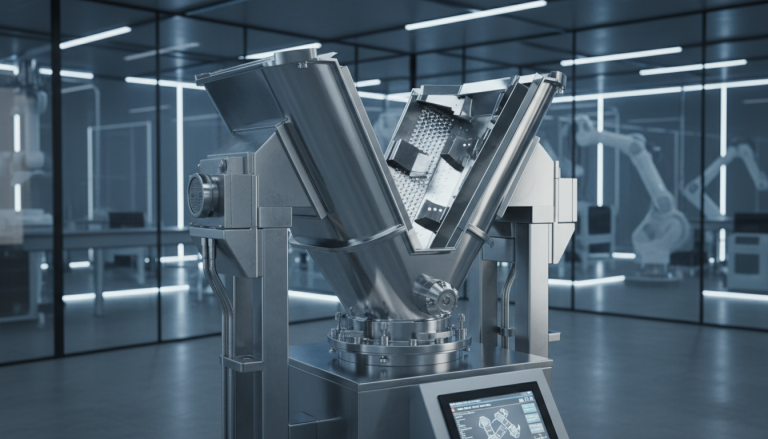
In large-scale production, higher output often makes uniformity harder to maintain. Many teams note that the traditional V Blender is simple, but may struggle to exceed 95% uniformity when material densities differ widely. Automated systems offer greater value here. Equipment with PLC control and CIP cleaning can reduce batch-change downtime by over 50%.
The Key Specs That Actually Matter During Selection
- Capacity range: From 2L to 15L for lab work to 500L and ton-scale systems, equipment should scale without losing performance.
- Control level: Options range from manual operation to full PLC-based automation, including recipe presets, live speed tracking, and inert gas protection.
- Real output: Capacity is no longer just vessel size. It should be matched with powder bulk density to ensure batch consistency.
Process Trends: Multi-Dimensional Mixing, Smart Monitoring, and Full Lifecycle Performance
Modern industrial powder mixers are moving toward integrated functions and smarter monitoring. Equipment is evolving from simple agitators into precision systems for dispersion, deagglomeration, and even online inspection. This shift spans from the classic Ribbon Mixer to the advanced Cone Mixer.
A Closer Look at the Physical Mixing Mechanisms
Powder mixing relies on the balance of shear, diffusion, and convection. The Paddle Mixer provides gentler shear, making it suitable for fragile materials, and can achieve about 99% uniformity. The Continuous Mixer boosts throughput through optimized screw conveying and shorter changeovers. Some premium 3D powder mixers use multi-axis motion to remove dead zones caused by gravity segregation.
Smart Prediction and Digital-First Delivery
By 2028, about 80% of high-end industrial powder mixers may include AI monitoring, improving predictive maintenance by around 25%. As raw materials become more complex, systems must adjust parameters in real time based on flow behavior. Hygienic design is also now essential for global markets. Leading equipment uses precision stainless steel construction and anti-segregation designs to reach discharge rates above 99.997%.
Global supply chain swings may still raise the cost of stainless steel and other core materials. Even so, demand for low-energy models driven by green manufacturing is expected to make up 25% of incremental market growth. Next, large systems above 500L with automation beyond standard PLC control will likely become the default choice for mid-sized and large manufacturers.
Tiered Buying Guide: Matching Buyer Profiles With the Right Global Suppliers
Strategic Needs by Production Scale
- Startups and small businesses (annual output under 100 tons):
Budget and space are the main limits. These buyers should prioritize flexible, easy-to-validate lab or small-batch systems. Mixers in the 2L to 15L range work well when moving from R&D to pilot production. Easy cleaning is especially important to avoid cross-contamination. - Growing mid-sized manufacturers (annual output 100 to 1,000 tons):
These firms need a strong cost-performance balance. 100L to 300L semi-automatic or fully automatic VH series machines are often the main option. Since downtime is a major concern, brands with fast-cleaning designs and reliable after-sales service usually rank highest. - Large multinational groups (annual output above 1,000 tons):
Their priorities are maximum consistency and throughput. Systems like Matcon’s IBC platform or Alfa Laval’s inline high-shear technology often support fully automated lines. Upfront costs are high, but long-term returns from lower batch variation can be significant.
Competitive Matrix of Key Global Industrial Powder Mixer Suppliers
| Brand / Series | Core Technical Strengths | Things to Consider | Best-Fit Applications | Estimated Price Range (USD) |
|---|---|---|---|---|
| Palamatic Process | Offers ribbon, paddle, and conical mixers. Strong hygiene standards and fine powder performance. Uniformity can reach 99%. | Higher initial cost. Integration may be more complex. | Large continuous food and pharmaceutical lines | 20,000 – 100,000 |
| LFA Machines | Covers 2L to 500L systems across the product lifecycle. Useful for dry blending validation. | Advanced automation options are more limited. | R&D centers and small to mid-sized pharmaceutical plants | 4,730 – 50,000 |
| Alfa Laval | Hybrid mixing technology, inline high-shear design, and strong CIP integration. | Primarily optimized for powder-liquid applications. | Large pharmaceutical lines involving liquid addition | 30,000 – 80,000 |
| Hywell Series | Multi-dimensional motion for dead-zone-free mixing. Supports PLC + CIP and inert gas protection. | Very complex powders may need extra customization. | Precision pharma processes with frequent formula changes | 15,000 – 60,000 |
| amixon | German engineering with discharge rates up to 99.997% and top hygiene performance. | High purchase cost. Custom lead times can be long. | Food and specialty chemical production with top hygiene requirements | From 50,000 |
| Matcon | Flexible IBC-based system with strong anti-caking ability and high line flexibility. | Depends heavily on compatible IBC infrastructure. | Mixing centers with frequent batch changeovers | 25,000 – 70,000 |
Industry Takeaways and a Practical Action Plan for Buyers
- Match the mixer to the material.
Check powder density and viscosity first. Fine powders often suit Ribbon Mixers, while precision formulas may need 3D or other multi-dimensional systems. - Validate before you commit.
Ask suppliers for material test videos or run small trials. This is the best way to verify blending claims. - Audit compliance in detail.
Review CIP demonstrations and certification documents to confirm the hygienic design meets international standards. - Calculate long-term ROI, not just purchase price.
A low quote can be misleading. Downtime reduction and energy savings should be key decision factors.
FAQ
Q: What drives the pricing of industrial powder mixers, and how should buyers choose correctly?
A: Prices vary widely, from about $5,000 for entry-level R&D units to over $100,000 for large continuous lines. Buyers should choose based on process needs, not catalog size. For development, a VM series machine can be a practical starting point. For mid-scale production, a 200L-class 3D mixer can balance 100 kg batch size and blending accuracy. The key is ensuring the PLC automation module can deliver uniformity above 99%, while the CIP system cuts cleaning labor by more than 50%.
Q: What are the core technical standards for automated industrial powder mixers?
A: High-end systems usually offer full PLC touchscreen control, recipe storage, and mixing cycles of 5 to 15 minutes while maintaining high uniformity. In pharmaceutical production, hygienic stainless steel such as SS316L, high-shear dissolution, and discharge rates above 99.9% are also key requirements. Lab-scale systems are ideal for development, but once scale becomes important, 500L+ industrial mixers drive real productivity.
Q: For pharmaceutical export projects, how can buyers identify manufacturers with solid international credibility?
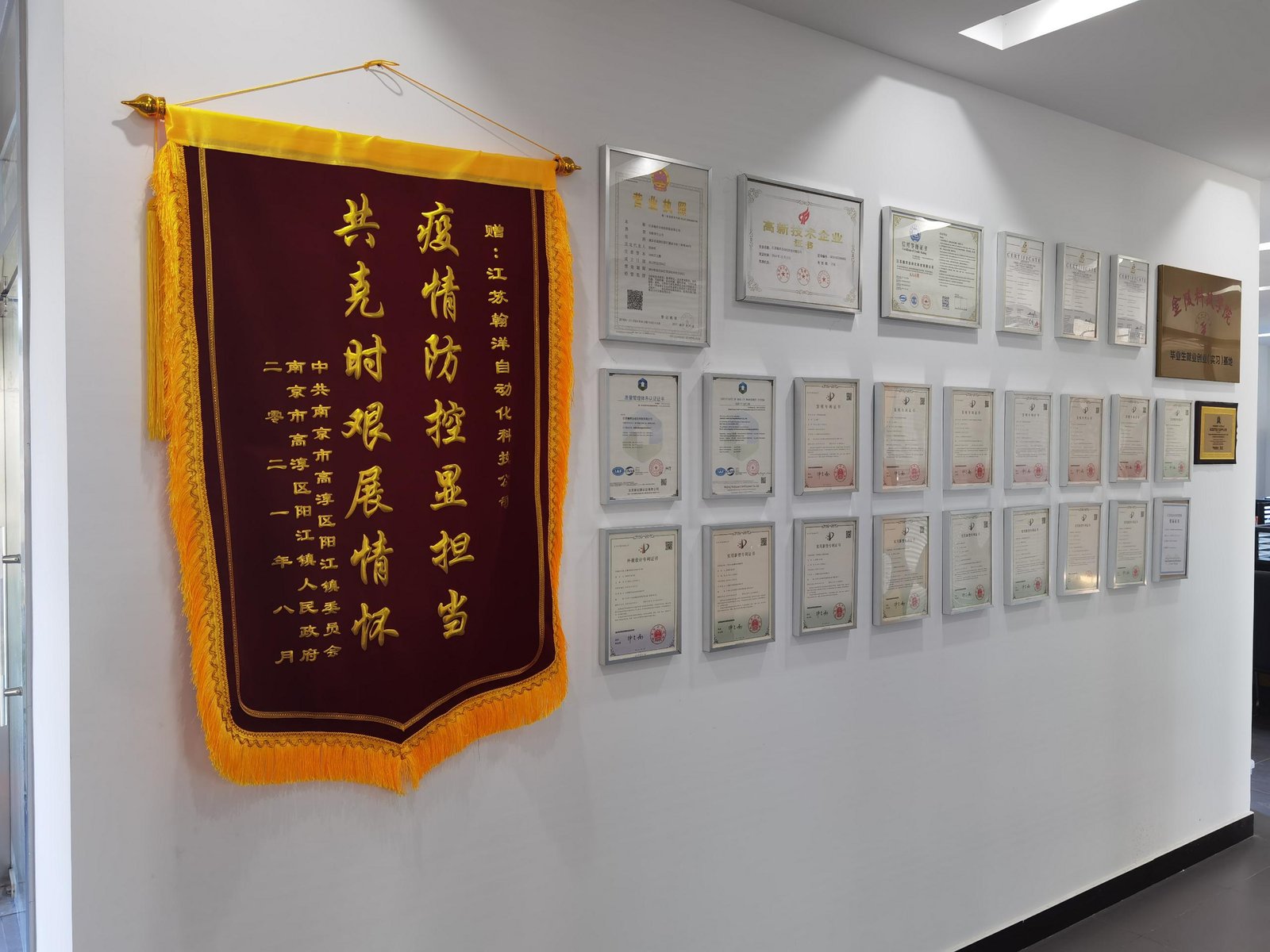
A: Start with suppliers that hold GMP-related credentials and have strong international delivery records, such as Hywell or amixon. Mechanical performance matters, but hygienic design is even more critical. Buyers should confirm the equipment supports quick disassembly and fast cleaning. Suppliers with global testing centers or remote digital validation services often provide greater value. In pharma, cleaning efficiency can affect production more directly than mixing logic itself.
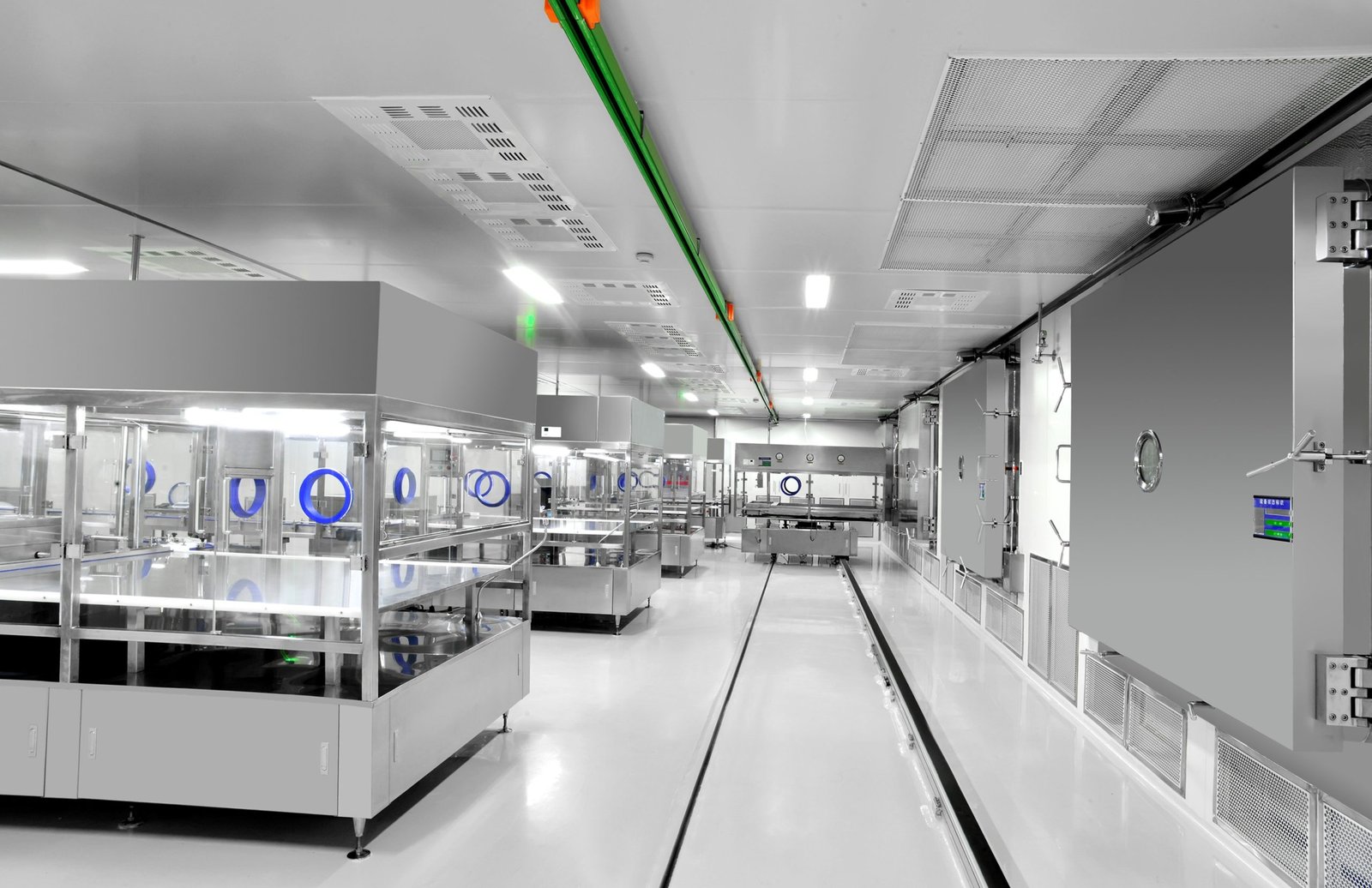
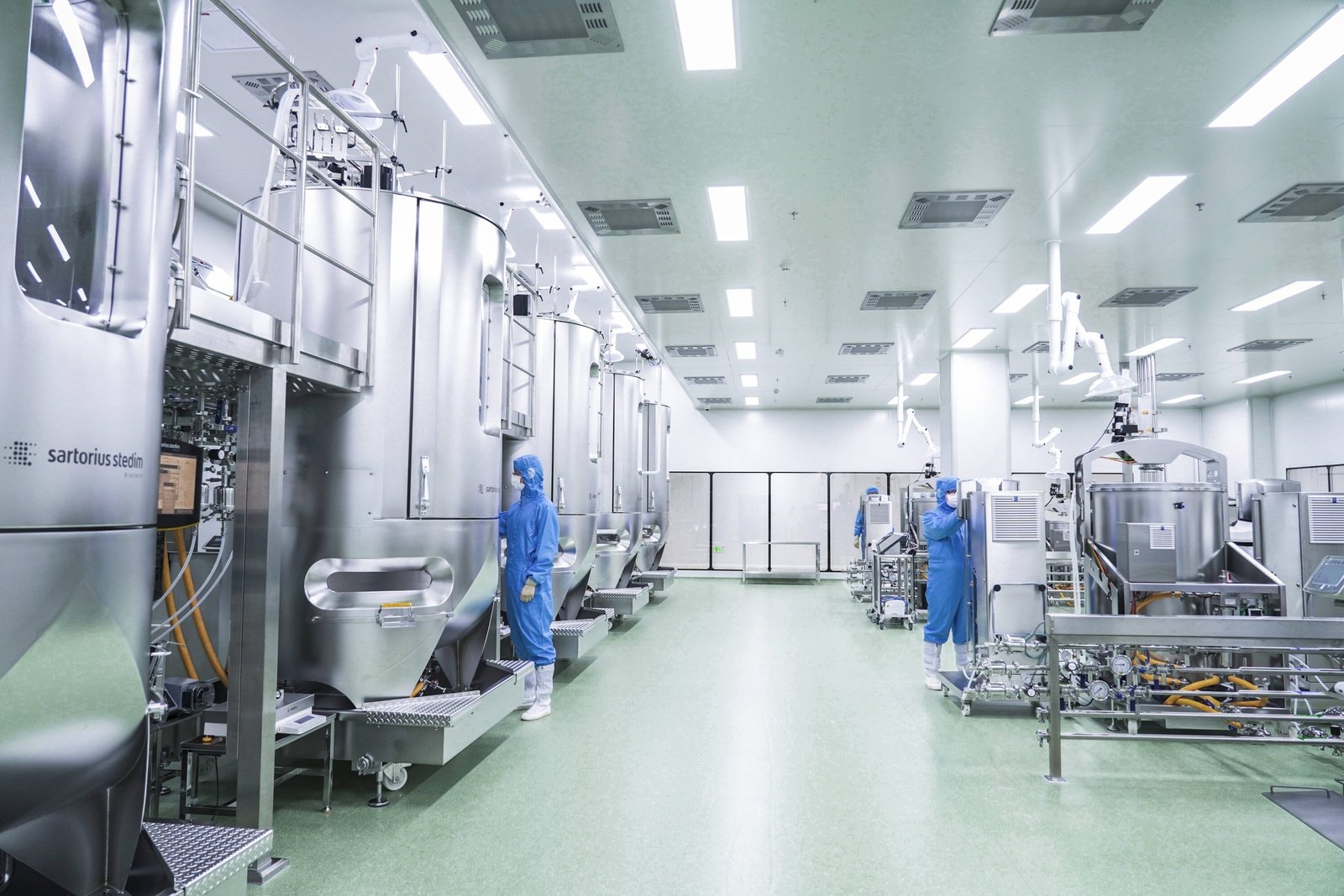
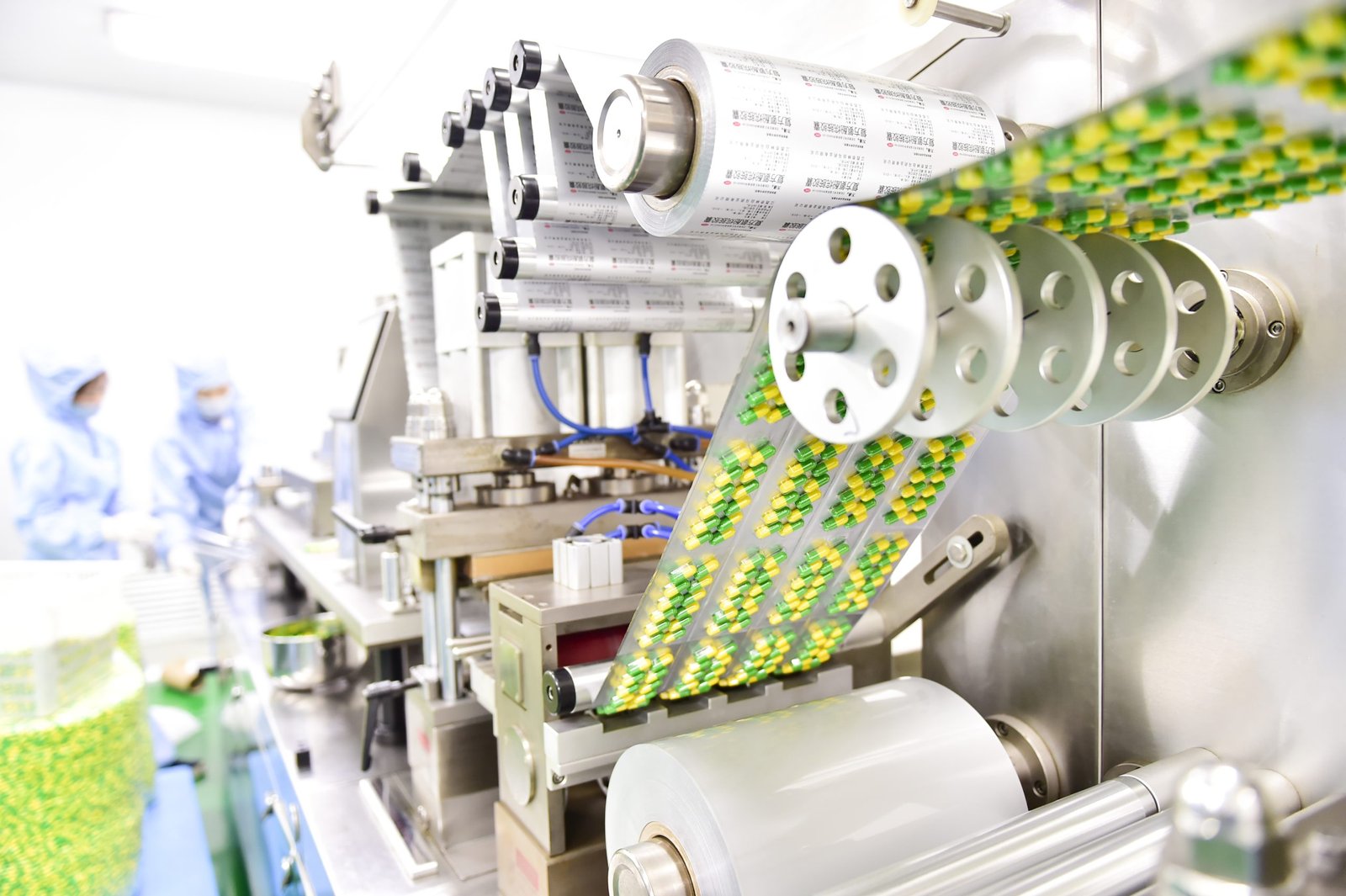
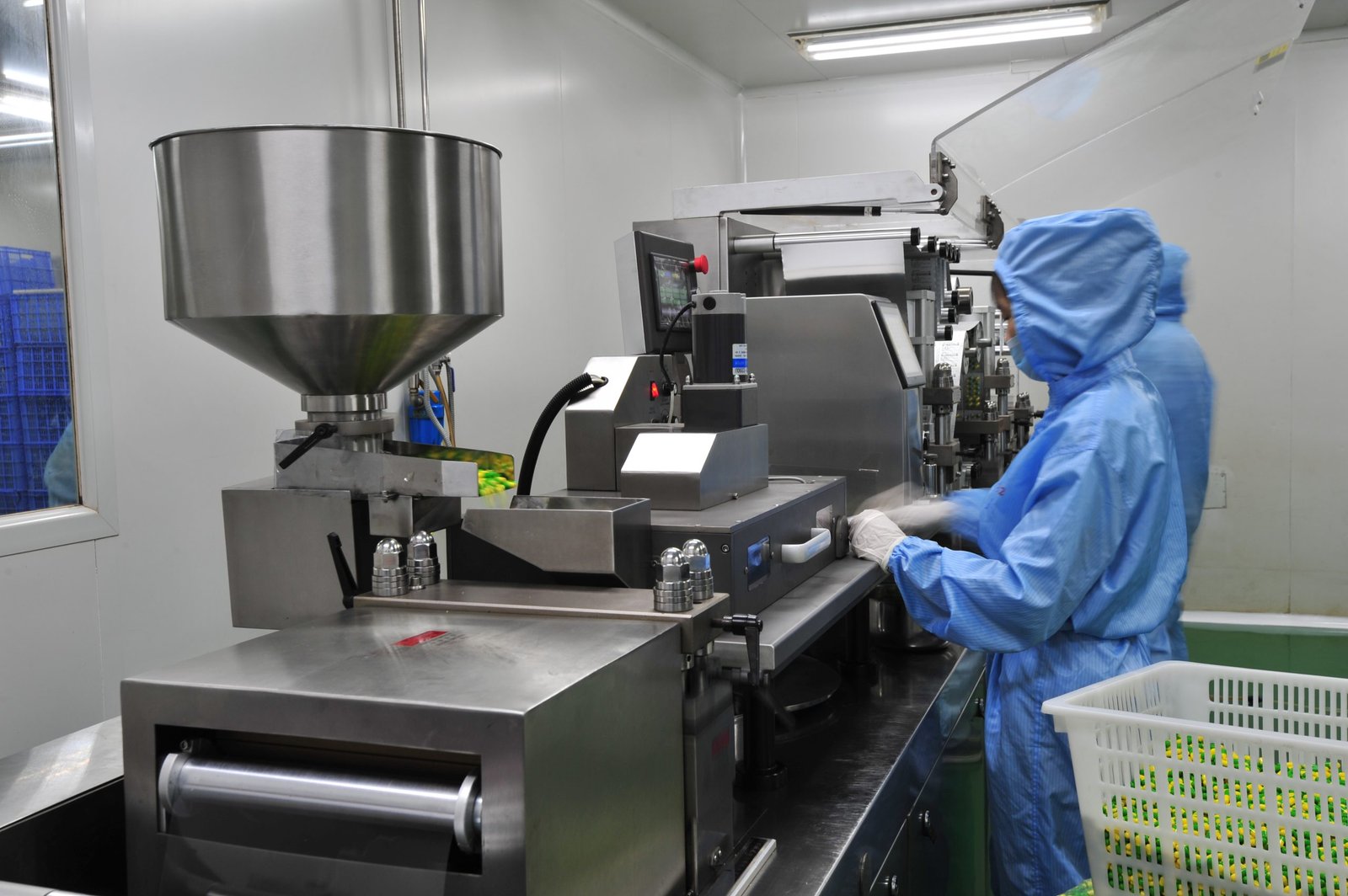
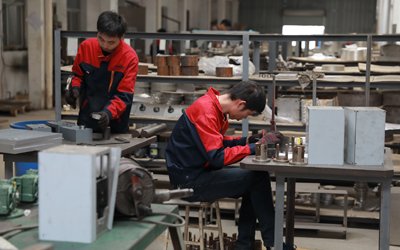
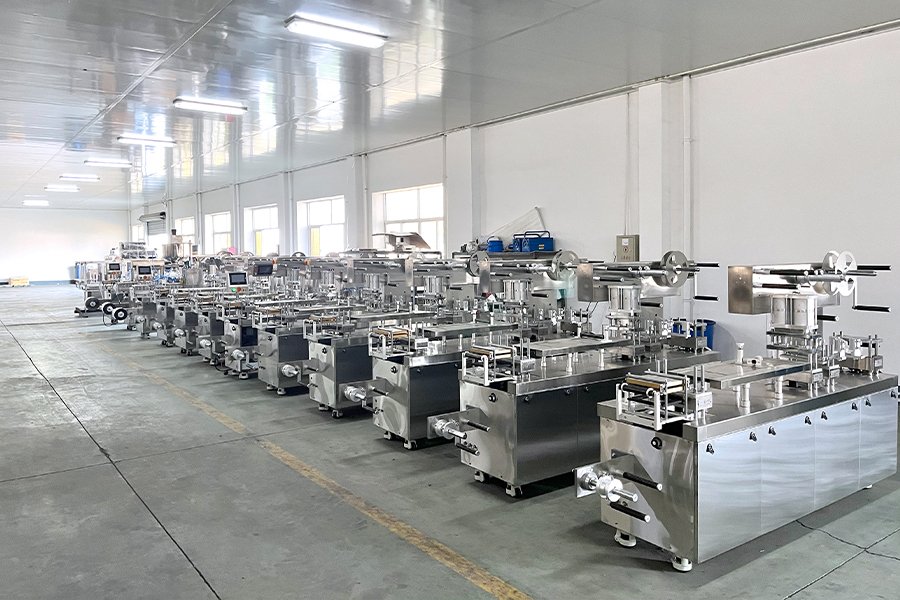
Welcome To Our Pharmaceutical Equipment Line Factory!
Why Choose Us
Specialized Factory
Economical Pricing Options
On-Time Delivery
Perfect Customer Service
Custom Solutions Available
Our technical experts are always ready to assist you in finding the perfect customized solution for your needs.