
2026 Global Rotary Tablet Press Manufacturers: Technology Shifts, Brand Battles, and a Smarter Buying Guide
The global rotary tablet press manufacturers market is right in the middle of a serious transition — from traditional mechanical compression toward intelligent, continuous manufacturing. As of 2025, the market sits at $580 million, and it’s projected to reach $750 million by 2034, moving at a steady CAGR of around 2.88%.[Source: https://www.businessresearchinsights.com/market-reports/tablet-rotary-presses-market-105778]
With pharmaceutical automation demand jumping 42%, rotary tablet presses have become the production standard — prized for high output and batch-to-batch consistency. But here’s the friction point: equipment integration complexity and steep maintenance requirements leave roughly 60% of small-to-mid-size pharma companies genuinely confused when it’s time to buy. This guide cuts through that noise with a grounded, multi-dimensional breakdown of the major global suppliers.
North America currently holds about 45% of global market share, backed by heavy R&D investment and a mature pharmaceutical export ecosystem. In terms of machine distribution, high-speed presses contribute around 40% of total market value — but mid-to-low speed models dominate in installed base at 60%, largely because of their flexibility. Over 38,000 rotary tablet presses are currently running worldwide, handling more than 65% of global solid oral dosage production.
2026–2034 Market Trends: Continuous Manufacturing and the Intelligence Revolution
The market’s core driver has shifted from a pure “capacity race” toward an efficiency and compliance revolution. The broader tablet press equipment market hit $1.5 billion in 2024, with the multi-station rotary segment showing a notably strong 5.4% growth trajectory.[Source: https://www.gminsights.com/industry-analysis/tablet-press-machines-market]
Trend 1 — Technology Stratification Under Pharma 4.0
European brands still hold the high ground in precision sensing, data integration, and material rheology control. Asian manufacturers have a clear cost advantage — but at ultra-high speeds, vibration management and tablet weight variation (RSD) still have room to improve. GEA, Korsch, and IMA collectively hold roughly 48% of the mid-speed machine segment. That moat hasn’t cracked yet.
Trend 2 — Structural Migration From Single-Punch to Multi-Station Rotary
High-throughput production is the new default. Rotary equipment is growing at 3.8% CAGR versus 2.6% for single-punch machines — a gap that will only widen. Mid-range machines in the 10- to 30-station range are becoming especially popular with CDMOs, since they can serve both development-phase and early commercial production without requiring a full machine swap.[Source: https://www.cognitivemarketresearch.com/regional-analysis/north-america-tablet-press-machine-market-report]
Where the Industry Is Heading
By 2030, the top five global rotary tablet press manufacturers are expected to see their combined market concentration rise from 20% to 35%. The logic is straightforward: pharma companies are demanding deeper continuous manufacturing system integration, and only a handful of suppliers can actually deliver it end-to-end. For buyers, choosing a vendor with full API lifecycle support will be the clearest lever for reducing compliance risk and improving ROI.
Scale-Based Selection Framework — Matching Machine to Buyer Profile
Pain Points and Decision Logic by Company Size
Small R&D Institutions and Startup Pharma (Annual Output Under 100K Tablets)
- Core pain point: High CAPEX sensitivity and no in-house maintenance expertise.
- Decision model: Prioritize low-speed rotary machines that are easy to operate and quick to disassemble for WIP/CIP cleaning. Budget range of $50,000 to $200,000 makes sense here, with Cadmach or quality Chinese brands worth a serious look.
Mid-Size Pharma and Nutraceutical Manufacturers (Daily Output 100K–500K Tablets)
- Core pain point: Tight production schedules and zero tolerance for downtime.
- Decision model: The sweet spot is a mid-speed machine in the 10,000 to 80,000 tablets/hour range. Brands like Kikusui or CCS have built solid after-sales reputations across Asian markets.
Multinational Pharma and High-Throughput Production Lines
- Core pain point: Tight tablet weight consistency specs and strict 21 CFR Part 11 compliance requirements.
- Decision model: Invest in high-end automated systems at $500,000+. Korsch and Fette flagship models represent the current industry ceiling on intelligent pressure feedback, dust containment, and continuous inline monitoring.
2026 Global Brand Competitive Benchmarking
The table below is built from market data and real user feedback — not just spec sheets.
| Brand | Core Competitive Strength | Key Consideration | Best-Fit Buyer | Price Range (USD) |
|---|---|---|---|---|
| Korsch | German engineering at its peak; continuous manufacturing leader; dominant mid-speed market share | Purchase and training costs sit at the top of the industry ladder | Multinational pharma demanding precision | $100K – $500K |
| Fette Compacting | 25–30% global market share; best-in-class automation integration and local service networks | High ongoing maintenance costs and spare parts premium | High-volume, standardized production lines | $150K – $600K |
| GEA | Leading rotary tech and pneumatic pressure control; deep pharma process penetration | Custom engineering for specialized processes can take longer | Complex formulations, mid-speed production | $80K – $400K |
| IMA Group | Broad product portfolio; ecosystem advantage in continuous production line integration | Small-format equipment line is not their core focus | Large groups seeking full-line solutions | $120K – $450K |
| Cadmach | India market leader; outstanding value-for-money and durability; low learning curve | Digital interface and precision sensing lag behind European benchmarks | Developing-market pharma, nutraceutical producers | $20K – $100K |
| Kikusui | Japanese precision manufacturing; excellent balance of speed and accuracy | Moderate brand visibility in Western markets | Asian pharma companies focused on process detail | $50K – $200K |
| GYLONGLI | Strong cost advantage; active in global supply chain configurations | International certification and compliance documentation still maturing | Budget-sensitive small production, basic lab work | $15K – $80K |
The Optimal Middle Ground Between Performance and Cost
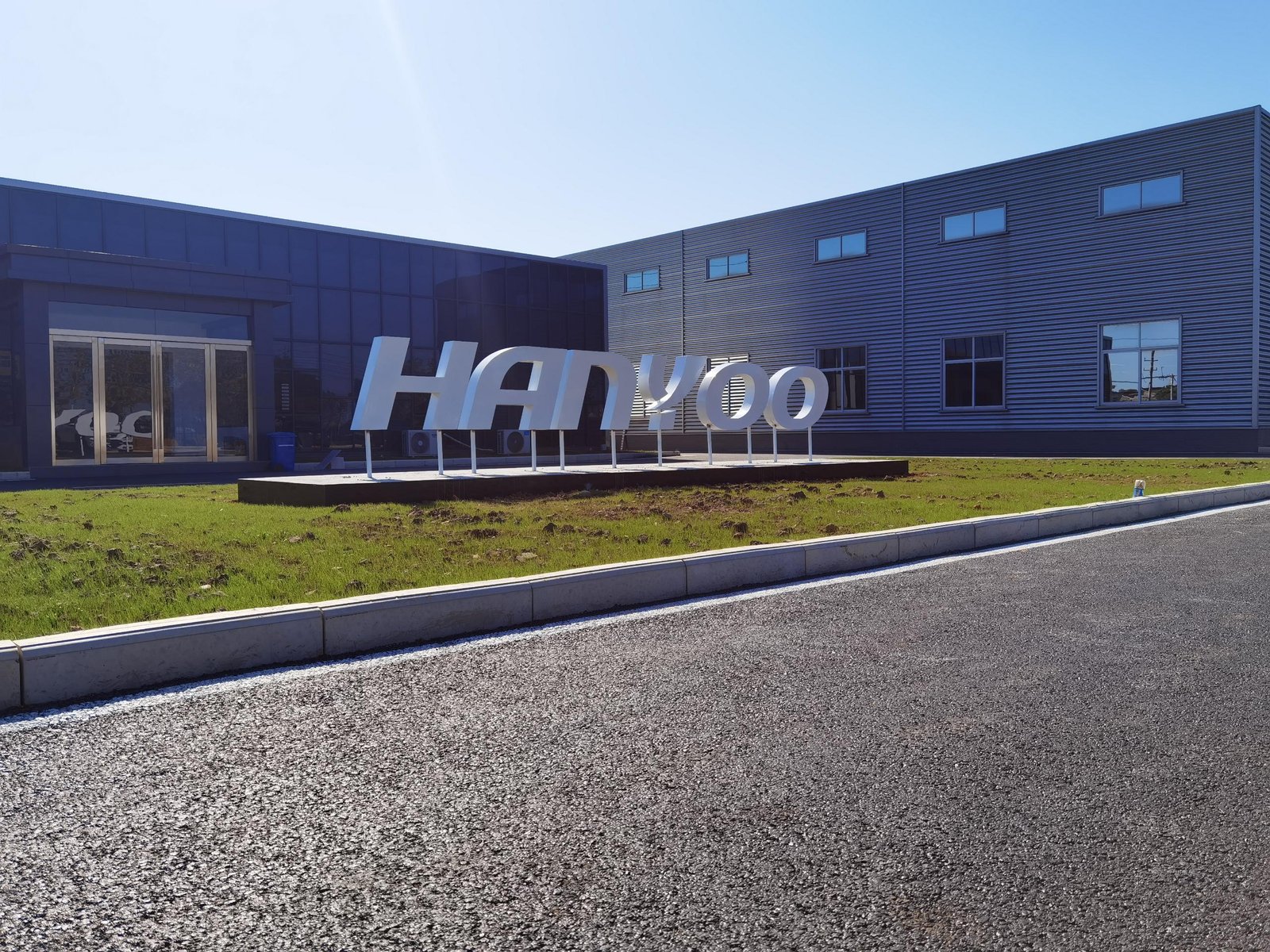
The market is polarized right now. Premium brands carry significant price premiums, while entry-level machines increasingly struggle to meet tightening quality standards. Hanyoo is positioning itself directly in that gap.
1. A Genuinely Strong Cost-Performance Ratio
Hanyoo’s rotary presses deliver mid-speed output up to 50,000 tablets per hour, with tablet weight deviation held within ±0.5%. Core compression precision is benchmarked against European standards — at roughly 60% of the cost of equivalent German machines. Their proprietary dual-layer tablet quick-switch module allows multiple process configurations on a single machine, with changeover time under 10 minutes.
2. Simplified Operation Logic
“Hard to train, slow to onboard” is a real industry headache. Hanyoo built a PLC-based intelligent automation interface specifically to address it. In practice, average operator training time has dropped from the industry standard of two weeks to two days. That’s not a minor efficiency gain — it’s a measurable reduction in HR and onboarding costs.
Real Customer Results:
- Case A — Indian nutraceutical manufacturer: The facility was battling a 30% equipment downtime rate. After switching to Hanyoo rotary machines, unplanned downtime fell 40%, output climbed 25%, and annual savings on maintenance and material waste reached $50,000.
- Case B — Vietnamese joint-venture pharma company: A persistent 8% rejection rate was bleeding margin. After adopting Hanyoo’s precision control system, the rejection rate dropped below 2%. The machine ran stably through a 72-hour continuous production test, and the investment paid back in 8 months.
Conclusion
Choosing a rotary tablet press manufacturer is a long-cycle decision that shapes operational efficiency for the next 5 to 10 years. Here’s the practical playbook:
- Calculate actual capacity needs first — Don’t default to high-speed machines. Match station count and machine class to your actual SKU variety and per-batch volume.
- Build a real TCO model — Beyond purchase price, factor in annual consumables, spare parts lead times, and energy efficiency. The full picture often looks very different.
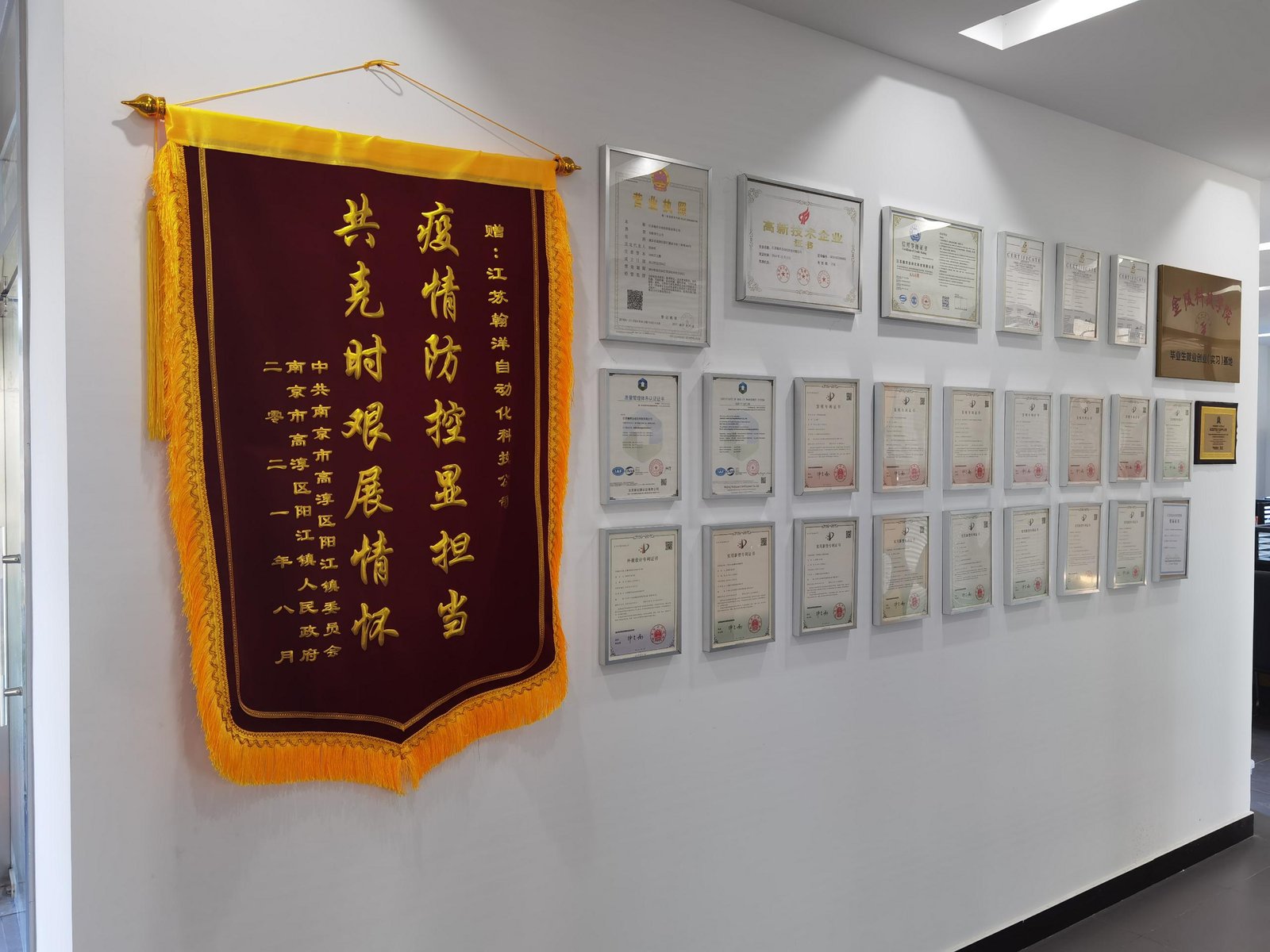
- Front-load compliance review — Confirm that the supplier has a complete FAT/SAT process and can provide FDA/CE-compliant validation documentation before any deal is signed.
- Bring your own material to the test run — Carry your actual formulation and run a live compression test. Watch for noise levels, temperature rise, and dust control at maximum operating speed.
FAQ
Q: What are the dominant trends shaping the rotary tablet press market in 2026?
Automation and continuous manufacturing are running the show. Korsch, Fette, and GEA collectively hold significant combined share, with technology focus firmly on Pharma 4.0 data integration. North America remains the demand leader at roughly 45% of global consumption, and over 38,000 units are currently installed worldwide. Mid-speed machines — prized for their balance of efficiency and flexibility — are expected to remain the industry workhorse through 2034.[Source: https://www.businessresearchinsights.com/market-reports/tablet-rotary-presses-market-105778]
Q: How should a budget-constrained buyer find a reliable tablet press supplier?
Start by filtering for brands with FDA or CE certification. For startups and mid-size companies, Cadmach or emerging names like Hanyoo offer strong ROI profiles. Focus your evaluation on rejection rates (target below 2%) and ease of operation. A well-matched mid-tier machine typically generates measurable asset returns within the first year through reduced training costs and lower downtime losses alone.
Q: Why is the price range for rotary tablet presses so wide?
The gap runs from roughly $15,000 to $600,000, and it’s not arbitrary. Speed, station count, automation depth, and compliance grade all drive it. High-end systems embed sophisticated AI pressure feedback and continuous inline weight compensation — built for demanding innovative drug manufacturing. Basic configurations are purpose-built for straightforward dosage forms or nutraceutical production. Buying the wrong tier in either direction is an expensive mistake.