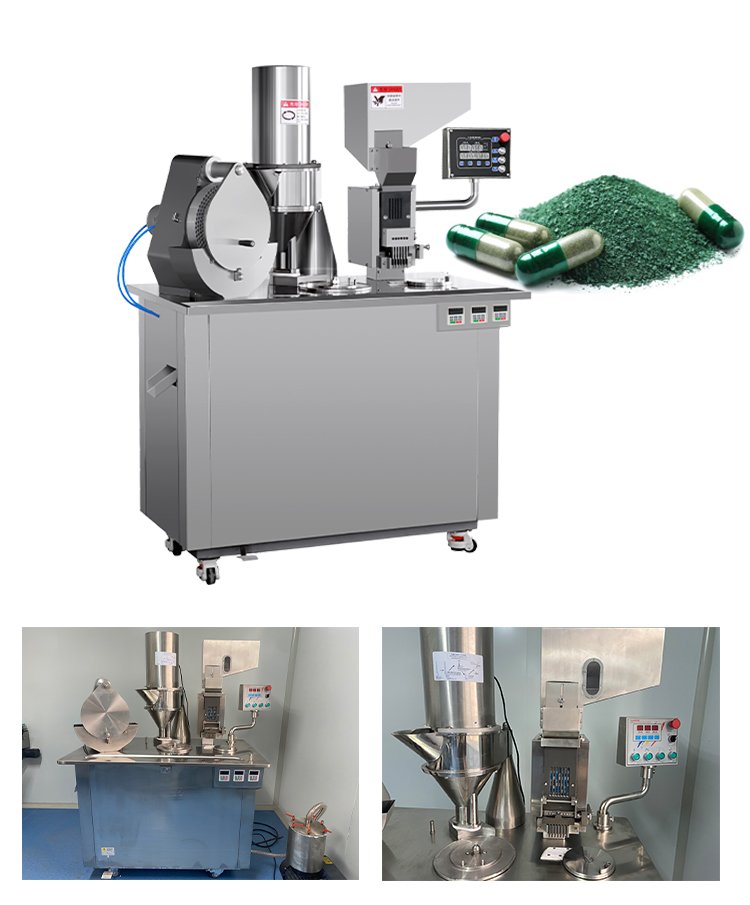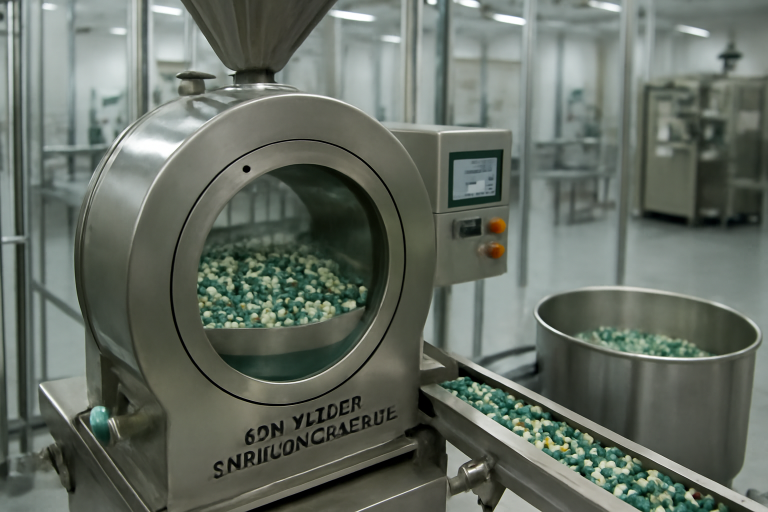

Industrial Granulator Buying Guide for Pharma, Food, and Chemical Production
Granulator is already a key term in 2026. It matters in pharma, food, and chemical manufacturing. The global pharmaceutical equipment market is expected to exceed $58 billion in 2025, with growth staying strong at 7.2% CAGR. As a result, granulation equipment now takes a larger role in capital planning.
From a production view, many older lines face the same bottleneck: wet granulation slows output. Modern granulators combine dry and wet mixing with spherical particle forming in one system. This creates a true all-in-one process loop. So replacing a granulator is not just changing one machine. It upgrades the whole production process.
Why is this the right strategic window for equipment replacement?
In a market focused on improving existing capacity, efficient granulation directly affects plant output. Advanced systems can improve process efficiency by 4 to 5 times and control binder use more precisely. That can reduce costs by about 25%. A standard industrial granulator usually handles particle sizes from 0.2 to 2 mm, keeps finished particle yield above 85%, and can control final moisture to 0.1%.
As manufacturing shifts toward digital and automated systems, smaller companies face growing pressure. They need equipment that is stable, practical, and cost-effective. In this cycle, choosing the right granulator can be a major advantage. Unplanned downtime can fall by more than 50%, helping reduce costs and improve output.
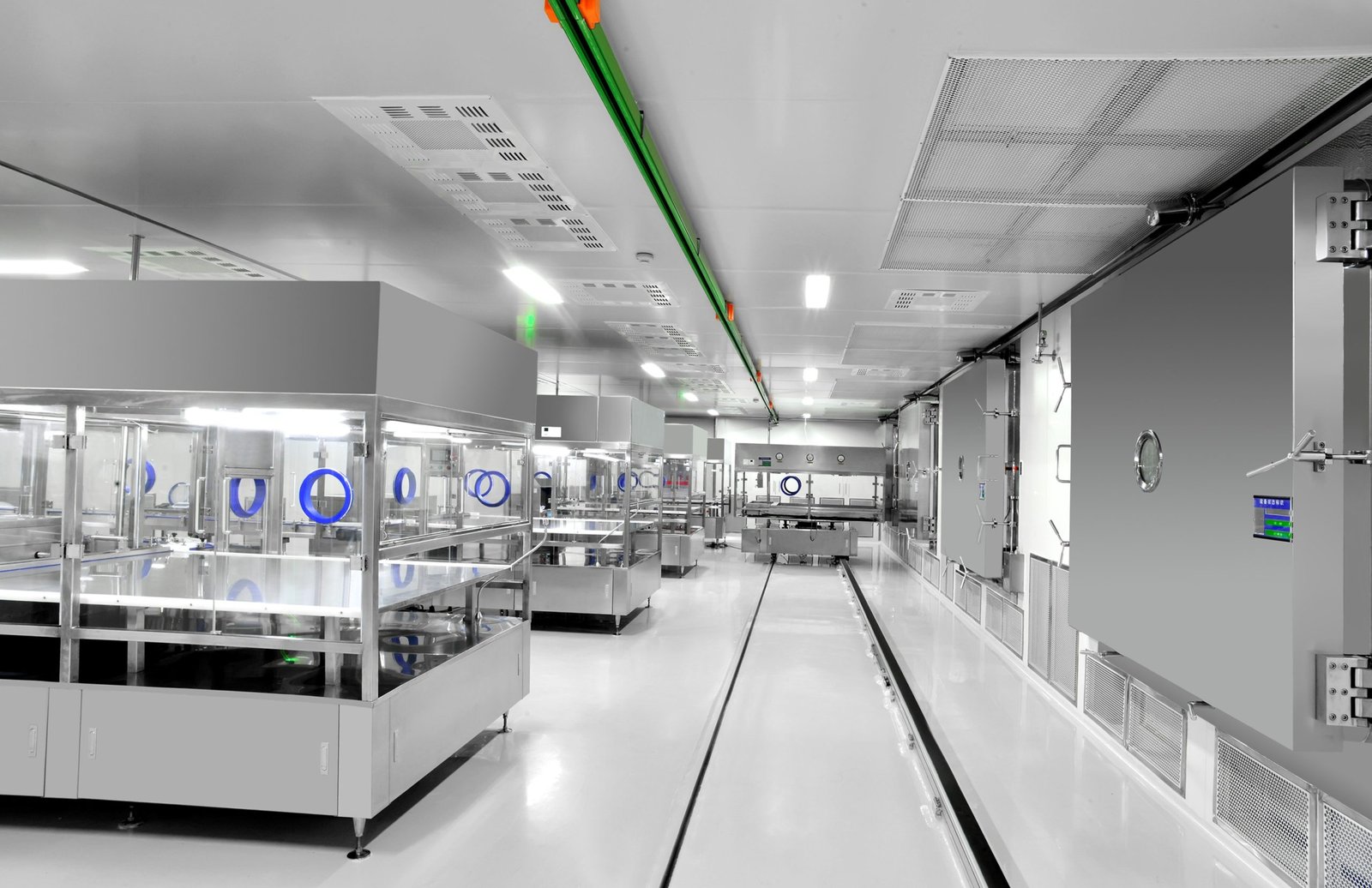
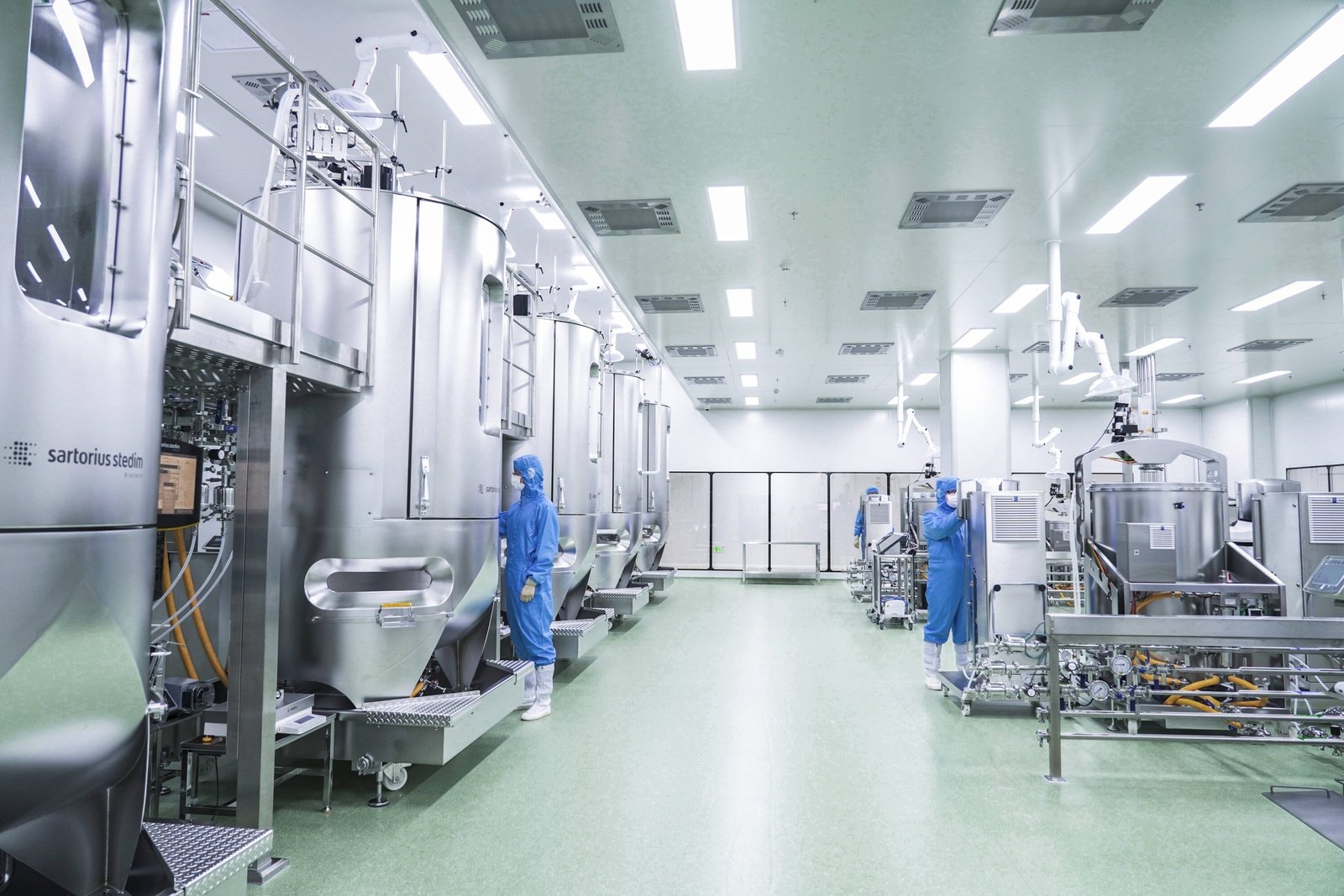
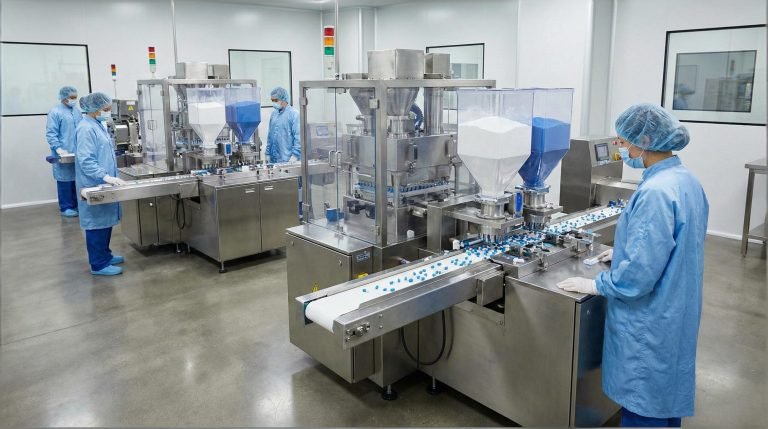
Under strict GMP standards, a granulator is no longer just a processing machine. It is now central to compliance and process upgrades. Traditional workflows separate dry mixing and granulation. New sealed integrated models combine them, supporting dust-free and continuous production. This makes the production environment much cleaner.
Automation in Industrial Granulators: Capacity Forecasts and Market Trends Through 2028
The core technology of granulation equipment is changing quickly. The focus is moving from adding hardware to building smarter systems. Automation has advanced from semi-automatic control to full PLC-based logic control. Production capacity now ranges from 500 kg batch processing to large continuous output.
High-performance models such as the PGL-150B can process liquid extracts with densities up to 1.3 g/cm³. With integrated fluidized bed sealing, they stay efficient and GMP-compliant. Industry forecasts suggest granulator sales in Asia could double by 2028, while automation rates may rise above 70%. The driver is clear: automation in pharmaceutical equipment is growing by about 15% per year, and smart production is becoming a key measure of flexibility.
From traditional swing granulation to high-efficiency screw extrusion
The market is at a turning point. Low-efficiency methods are being replaced by precision systems. Screw extrusion is gradually taking over from traditional swing granulation. The YK series still works for wet and lumpy materials, but its output no longer matches modern large-scale factories. By contrast, the GHL series produces more spherical granules with better flow, making it more suitable for controlled-release and enteric-coated granules.
The upgrade is not only about shape or output. Feeding and control are also getting smarter. Variable-frequency feeding and multi-unit coordinated control are becoming common. These changes reduce labor intensity and help machines run more steadily under heavy loads. Batch consistency is also easier to maintain.
Where capacity metrics and environmental compliance now meet
A standard granulator remains competitive for two main reasons: its 85%+ forming rate and tight particle size control. For special process needs, upgraded inner-roller multi-flow atomizers now support 500 kg per batch high-load production.
Environmental rules are also reshaping buying decisions. Wet dust removal and air-sweeping systems are becoming standard. PLC touchscreen systems make real-time monitoring and traceability much easier. This combination of green production and smart control is pushing Chinese-made granulators toward the premium end of global markets.
At the same time, modular design is becoming the default. Swappable processing units allow one machine to support multiple formulas. This gives manufacturers a more flexible and lower-cost upgrade path. In the 2026 market, companies that keep non-automated equipment risk falling behind in both cost control and response speed.
The Industrial Granulator Buyer Profile: How to Choose by Production Scale
What different manufacturers actually need
- Small businesses (under 1,000 tons per year):
These buyers usually have limited budgets. Their main problems are high labor costs from manual work and uneven granule quality. An entry-level granulator with 200 to 500 kg per batch is usually enough. Avoid overspending. Focus first on easy maintenance and stable output. Full automation is not always needed. - Mid-sized businesses (1,000 to 5,000 tons per year):
These companies are often expanding. Their bottlenecks usually come from drying efficiency and consumable use in wet processes. A PLC fully automatic system is a better fit. Capacity should be around 1 ton per batch. A fluidized bed system is also useful. With the right setup, binder use can drop by 25%, improving both cash flow and production speed. - Large businesses (over 5,000 tons per year):
These buyers focus most on continuous output and environmental compliance. High-end screw extrusion models are the better option. They should support variable-frequency adjustment and 30% to 110% capacity flexibility. This is important when equipment must run 8,400 hours per year with zero failure.
No matter the company size, two things remain essential: granule forming rate and blockage control. A practical formula is: actual capacity demand × automation level (ideally above 80%) = the best asset allocation fit.
Brand and technology comparison by return on investment
| Core Brand / Series | Process Advantage | Limitation | Best Use Case | Estimated Investment (USD) |
|---|---|---|---|---|
| Mid-range GMP Type (such as PGL series) | Integrated fluidized bed sealing, uniform granule distribution, strong GMP compliance | Cleaning and changeover can take longer | GMP lines in mid-sized pharmaceutical plants | 20,000 – 45,000 |
| Economic Swing Type (such as YK series) | Simple structure, handles high-moisture materials well | Non-continuous operation, limited efficiency under heavy output | Entry-level food and chemical processing | 8,000 – 16,000 |
| High-Efficiency Rotary Type (such as GHL series) | Excellent sphericity, lower drying energy use | More dependent on custom roller groove design | Controlled-release and high-flow granulation | 25,000 – 55,000 |
| Specialty Chemical Type | Stable operation, competitive energy use per unit | Designed more for chemical materials, not pharma-grade hygiene | Plastics and fine chemical production | 15,000 – 35,000 |
Note: The figures above are based on common industry specifications and average market prices. Final cost depends on quotations and technical agreements.
Strategic Buying Advice: How to Lock in the Right Granulator
- Start with a real capacity baseline.
Work backward from your annual production plan. Match daily demand to machines from 500 kg to 2 tons. This helps avoid idle capacity or overload. - Go deeper on technical benchmarking.
Request a full technical specification sheet. Focus on automation logic, live demos, and digital interface protocols. - Evaluate suppliers from more than price.
Price matters, but GMP records, after-sales speed, and spare-part compatibility matter just as much. - Insist on a live machine test.
A one-week trial is valuable. Check whether the qualified granule rate stays above 85%. - Check environmental compliance early.
Make sure exhaust treatment and dust emissions meet local standards. For example, SO2 emissions should stay below 150 mg/Nm³ where required.
In short, buying a granulator is not just a fixed asset purchase. It is a strategic step for long-term stability, compliance, and cost control.
FAQ
What will industrial granulator pricing look like in 2026?
Pricing depends on the technical route. Entry-level models start at about $8,000, while high-end systems with smart monitoring can exceed $50,000. As raw material and technology costs rise in 2026, buyers with budgets above $10,000 should focus on cost-effective swing or semi-automatic rotary models. If long-term return is more important, early investment in automation usually pays off through labor and energy savings.
Which technical specs matter most when buying a fully automatic granulator?
Three specs matter first. Check the particle size range, usually 0.2 to 2 mm. Check the forming rate, which should stay above 85%. Then review how deeply the PLC system is integrated. A high-efficiency machine should finish dry mixing in 2 minutes and granulation in 1 to 4 minutes. That can raise total output efficiency by more than 400%. Stainless steel corrosion resistance and the negative-pressure performance of the dust removal system also matter.
What is the best selection logic for pharmaceutical granulators?
For pharmaceutical plants, GMP sealing and cross-contamination control are the top priorities. A linked system with 500 kg+ batch capacity and integrated fluidized drying is usually the better choice. If the process includes tableting or capsule filling, the GHL rotary granulator often has an advantage because its granules are more spherical and flow better. Buyers should also confirm output flexibility. The machine should handle peak demand and support about 8,400 operating hours per year.