How to Choose a Rimek Tablet Press: Models, Cost & Compliance
Industry Overview: How Supply and Demand Are Shifting in 2026
The global pharma equipment market is transforming around three priorities: efficiency, intelligence, and compliance. Rimek Tablet Punching Machines have evolved from simple production tools into strategic cost-optimization assets for pharmaceutical companies worldwide.
The global tablet press market crossed $4.5 billion in 2025 and is projected to grow at a CAGR of ~6.8% through 2030, fueled by biologics and generic drug expansion. [Source: https://www.grandviewresearch.com/industry-analysis/tablet-compression-machines-market]
The core challenge: balancing OPEX control with stricter compliance — simultaneously. As a flagship brand under Karnavati Engineering, Rimek’s cGMP-native design and double-sided rotary compression architecture set it apart from most competitors.
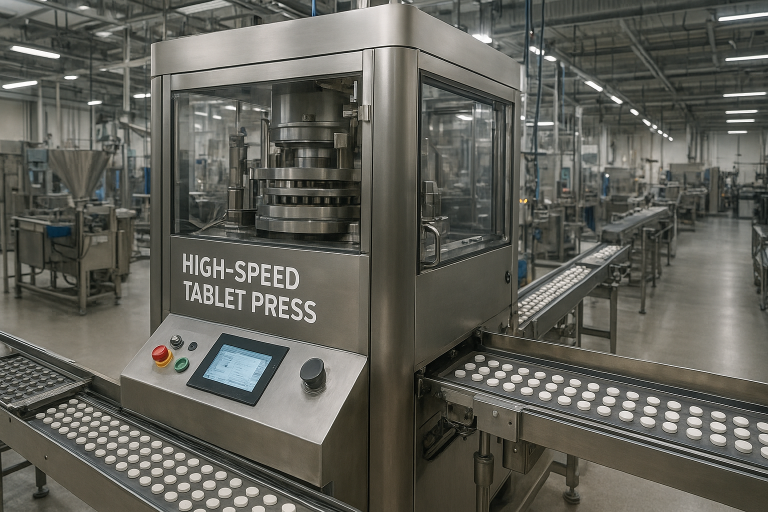
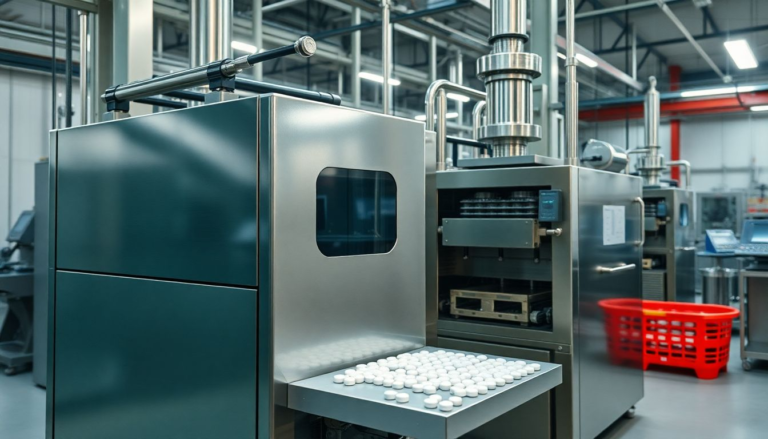
The Unik I FC, in 27–45-station configurations, delivers up to 259,200 tablets per hour with 10-ton main compression force — meeting the hardness and uniformity demands of mid-to-large production lines.
In 2026, Indian manufacturers like Karnavati are delivering on ISO-certified, vertically integrated production with lead times down to 4–6 weeks — a key advantage for companies scaling capacity quickly. [Source: https://www.statista.com/topics/1764/pharmaceutical-industry/]
Tech Evolution: Where Modular Design Meets Industry 4.0
Rimek’s next-generation development centers on two pillars: modular architecture and smart control integration. From the WORM gear drive turret in the Unik I FC to the AC Variable Frequency Drive (ACVFD) in the Mini II, component-level upgrades translate into real floor efficiency — including 50%+ reductions in changeover time.
Here’s a forward-looking read on the market:
By 2028, double-sided rotary tablet presses — with Rimek as a leading example — are expected to capture 40% of the mid-range pharmaceutical equipment segment, driven by three factors:
- Materials advancement: ELNP (Electroless Nickel Phosphorus)-coated turrets deliver ~3x improvement in corrosion and wear resistance, cutting long-term maintenance costs.
- Data compliance: Integrated PLC touchscreen systems built to 21 CFR Part 11 standards enable precise AWC (Automatic Weight Control) within tight tolerances.
- Efficiency gains: New-generation Rimek machines double output within the same footprint, with OEE improving by an average of 25%. [Source: https://www.pharma-test.de/wp-content/uploads/2017/10/phg-40-02300-minipress-ii-e.pdf]
Strong OEMs are now embedding themselves into Western pharma supply chains through SS316 three-piece turret customization, D/B/BB tooling compatibility, and full validation documentation — turning compliance into a compounding competitive advantage as FDA audits tighten.
Global Procurement Strategy: Matching Machine to Mission
- Small Labs and Pilot-Scale Operations
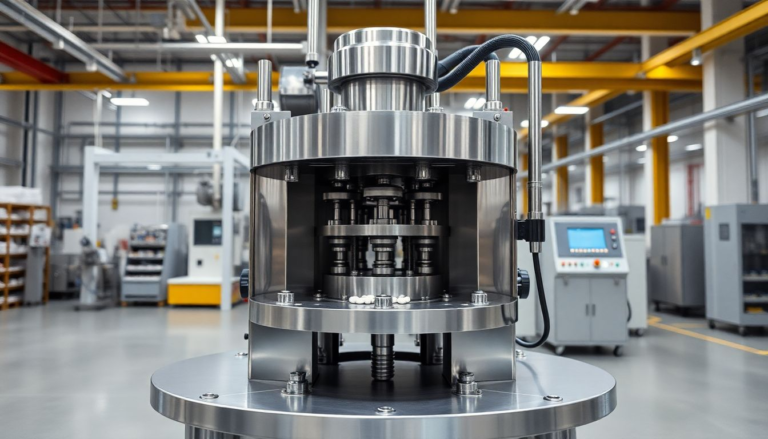
For annual output below 5 million tablets, the Mini II series is the answer. At just 0.67 × 0.46 meters, it produces 19,200 tablets per hour — sufficient for R&D and pilot-scale needs. Its dual-side lubrication system minimizes routine maintenance, ideal for lean technical teams.
- Mid-Sized Pharma: Scaling Without Sacrificing Flexibility
At 5–50 million tablets annually, the Unik I FC 35-station model delivers 201,600 tablets per hour with robust pre-compression for difficult materials. Its ECM (Exchangeable Compression Module) cuts changeover from hours to minutes — essential for multi-SKU and bi-layer tablet production.
- Large-Scale Manufacturers: Automation and MES Integration
At 50 million+ tablets per year, the NXi 49 — capable of 450,000 tablets per hour — leads the category. Buyers at this scale evaluate not just specs, but the supplier’s ability to deliver complete FAT/IQ-OQ validation documentation and sustain performance under extreme loads.
- Competitive Comparison: Leading Tablet Press Brands in 2026
| Brand / Model | Core Technical Advantage | Potential Limitation | Best Use Case | 2026 Reference Price (USD) |
|---|---|---|---|---|
| Rimek Unik I FC | Double-sided compression, 10T force, 21 CFR compliant | Higher upfront cost for full config | Mid-to-large scale, bi-layer tablets | $85,000 – $155,000 |
| Rimek Mini II | Compact footprint, center-drive, low space requirement | Output ceiling ~20k tablets/hr | R&D centers, small pharma facilities | $25,000 – $55,000 |
| Natoli NP-500 | Proprietary deep-fill technology, double-sided | Higher maintenance cost, longer lead times | Specialty deep-cavity tablet R&D | Inquiry-based |
| Pharma Test MiniPress | Precision ELNP-coated tracks, SS316 build | Lab-oriented, lower throughput | Drug stability testing and training | Inquiry-based |
| Rimek NXi 49 | Peak output (450k/hr), ECM module system | Single-sided rotation, lighter pre-compression | High-volume single-formula production | From $135,000 |
Strategic Procurement Roadmap: How to Buy Smart in 2026
Follow these four steps to avoid costly procurement mistakes:
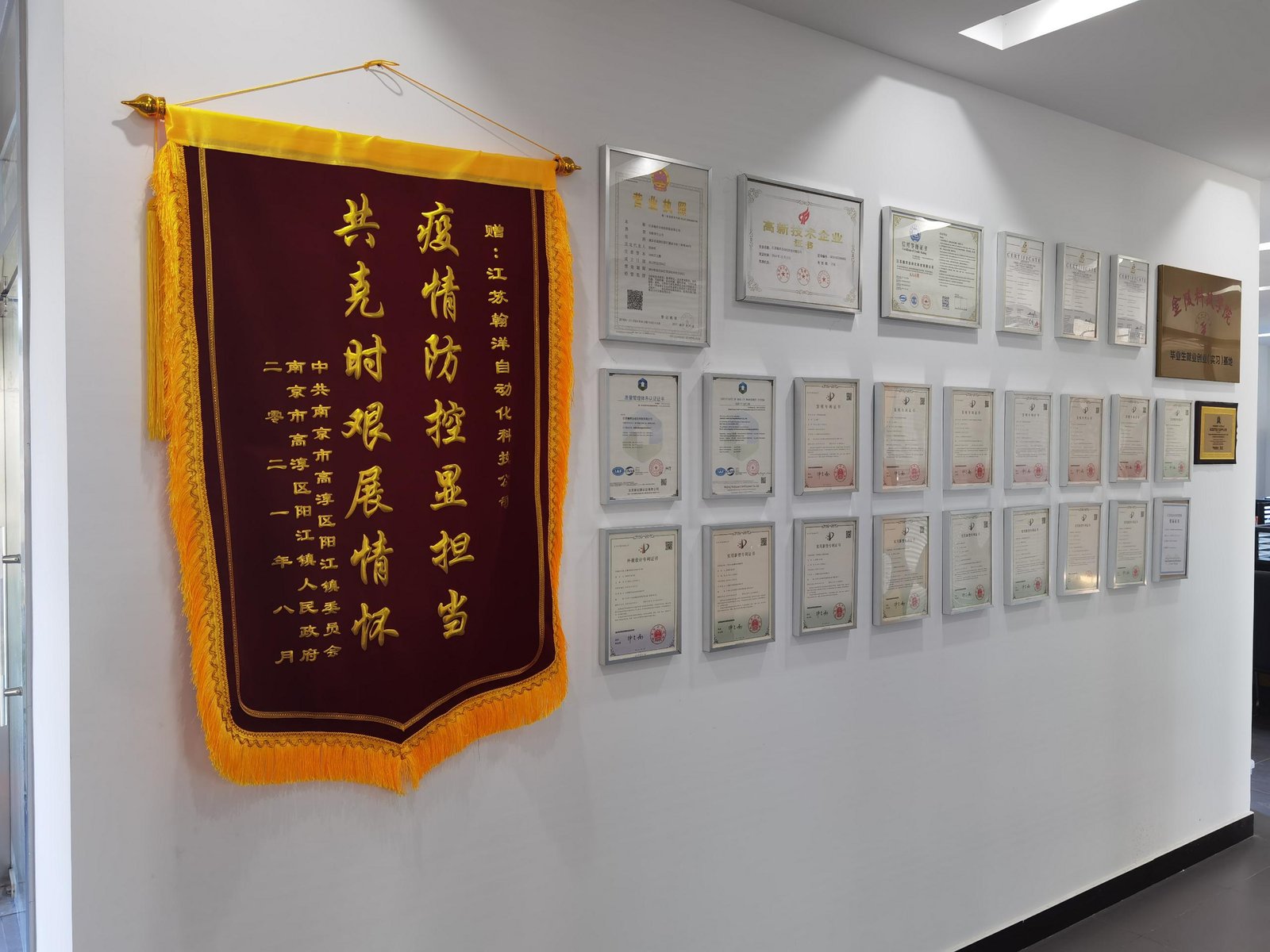
- Step 1 — Verify Credentials First: Confirm full cGMP/ISO certification and FAT/IQ-OQ validation documentation — without these, regulatory audits become a serious risk.
- Step 2 — Validate with Your Actual Materials: Request a live demo video and, if possible, submit sample materials for hardness, uniformity, and disintegration testing before committing.
- Step 3 — Negotiate OEM Configuration: Prioritize AFR (Automatic Single Tablet Rejection) and PLC smart controls to reduce manual intervention costs over the machine’s lifespan.
- Step 4 — Visit the Factory, Then Sign: An on-site audit is worth the trip. Confirm the contract covers after-sales support, spare parts, and a minimum one-year warranty.
FAQ
Q: What’s the price trend for Rimek tablet presses in 2026?
Expect a 5–10% price increase driven by raw material and electronics costs. The Mini II starts at $25,000–$50,000; a fully optioned Unik I FC can exceed $150,000. Even so, Rimek remains significantly more price-competitive than equivalent European or American brands.
Q: How do you evaluate OEM supplier quality?
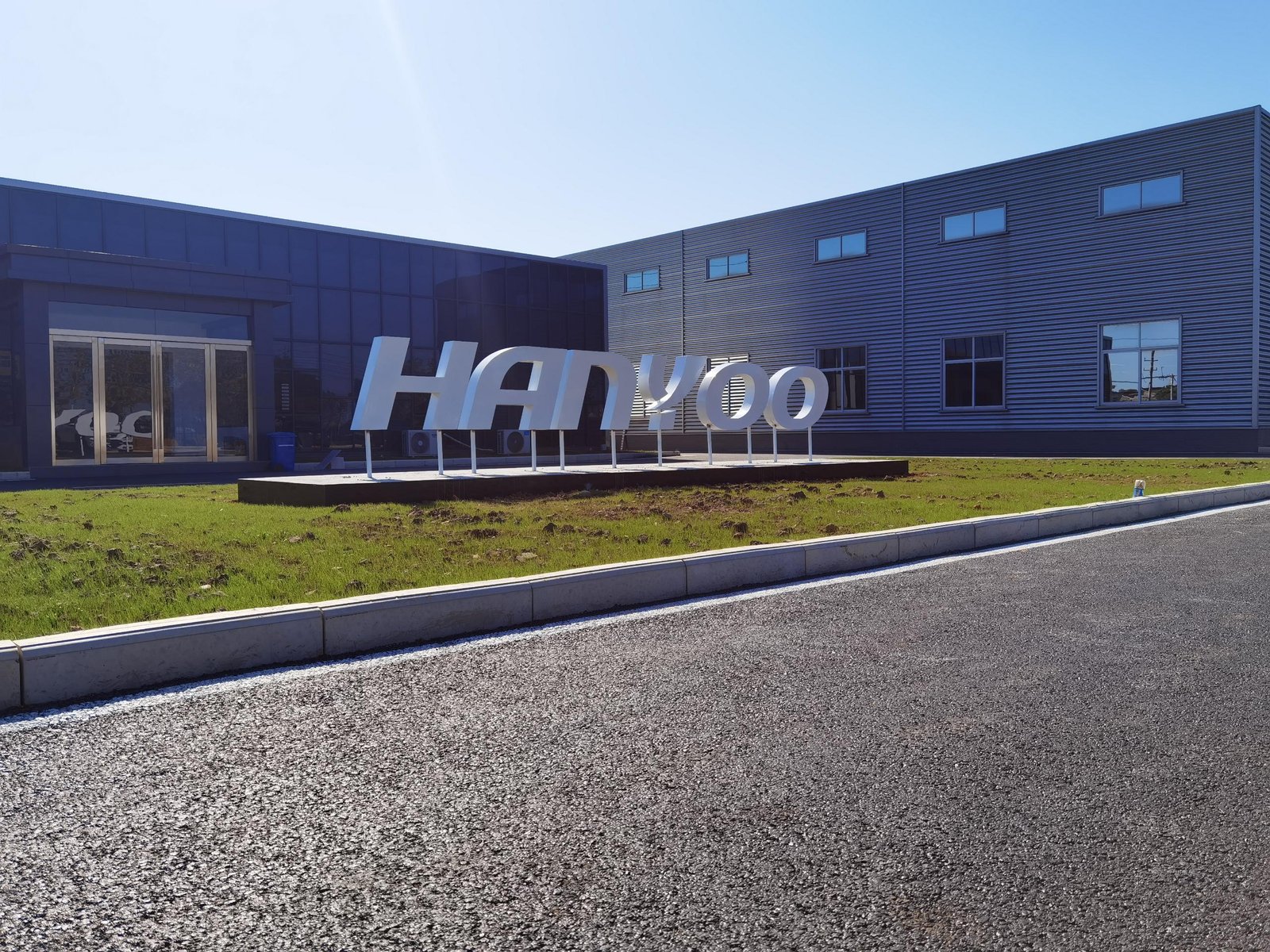
Check for D/B/BB multi-punch interchangeability and ELNP corrosion-treated turrets. Hanyoo’s Rimek equipment supports three-piece turret customization with a 10-year anti-corrosion guarantee.
Q: Can Rimek’s automation meet regulatory traceability requirements?
Yes. High-configuration models support real-time production data logging aligned with FDA Data Integrity requirements. The AWC system monitors every tablet and auto-rejects out-of-spec units — no gaps in the audit trail.