
Rotary Tablet Press Prices 2026: China vs Europe vs USA
When pharmaceutical, food, and fine chemical companies plan capacity upgrades, the Rotary Tablet Press Machine is central to capital allocation decisions. In 2026, identical output can cost anywhere from $3,000 to $50,000 depending on origin and manufacturer — a gap driven by supply chain logic, compliance costs, and buyer risk tolerance.
2026 Global Tablet Press Supply Map and Industrial Cluster Effects
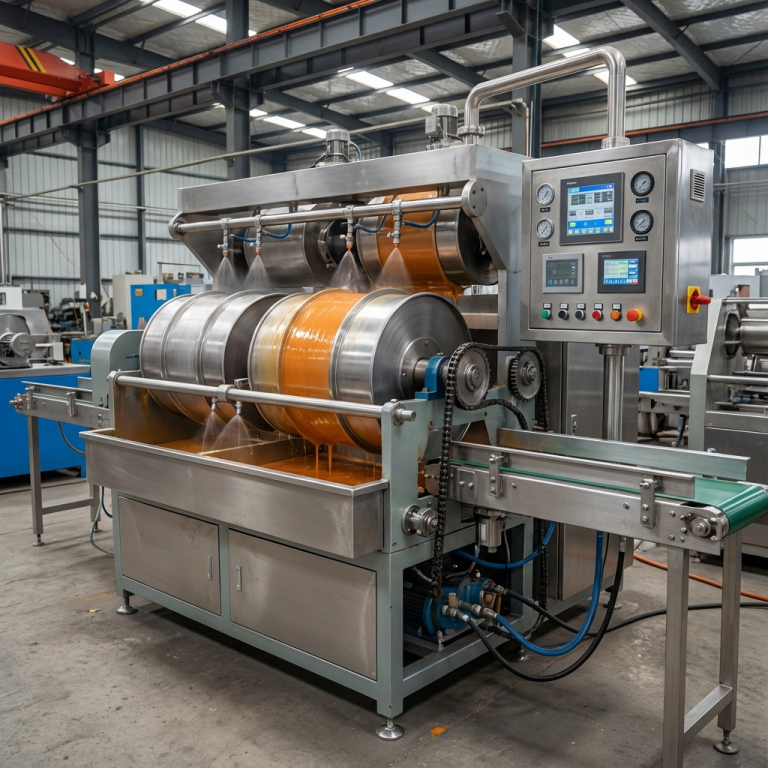
The global supply chain has organized into a clear pyramid. Chinese manufacturers — clustered in Shanghai, Zhengzhou, and Guangdong — deliver competitive pricing through deep parts ecosystems and fast assembly cycles. This structural cost advantage is difficult for European brands to replicate at equivalent price points.
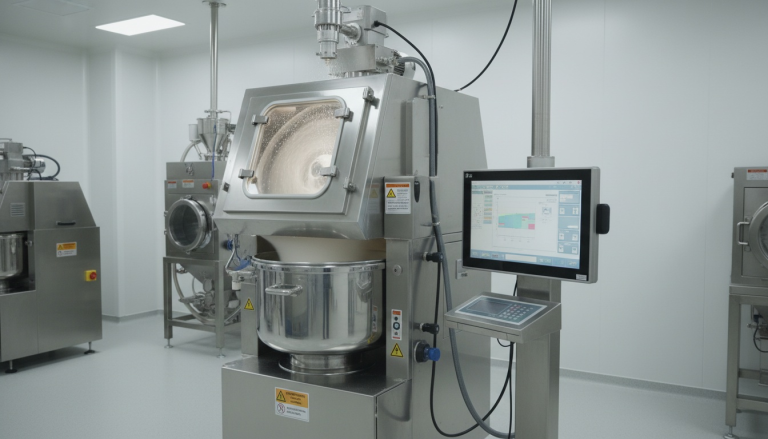
European manufacturers like UK-based LFA Machines and Germany’s engineering brands dominate the premium tier through high-precision customization and compliance engineering. The North American market runs two parallel tracks: large pharma buys new equipment; mid-sized operators increasingly turn to quality refurbished units.
| Manufacturing Region | Key Manufacturers | Market Position | 2026 Reference Price Range |
|---|---|---|---|
| China (East/Central) | Shanghai Tianfeng, Zhengzhou Siweiben, etc. | High-volume production, fast delivery, strong value | US$1,900 – $8,500 |
| China (South/Southeast) | Guangdong-based manufacturers, Daxiang Machinery, etc. | Mid-to-high spec, international certifications, high automation | US$3,500 – $16,000 |
| Europe (UK/Germany) | LFA Machines and European tier-one brands | R&D-oriented, cGMP compliant, custom engineering services | US$15,000 – $35,000+ |
| North American Market | Branded refurbishers and premium distributors | Refurbished equipment, local compliance upgrades, capacity supplements | Condition-based negotiation |
Tablet Press Pricing Tiers: Decoding the Three Levels of Technical Value
Entry-Level Economy Tier (US$1,900 – $3,800): The Starting Point for Startups and Pilots
This segment targets small lines with daily output of 10,000 to 40,000 tablets. Standardized tooling and simplified controls keep costs low. For R&D-stage companies or tight budgets, it’s the lowest-cost way to validate a process before scaling.
Industrial Mainstream Tier (US$4,000 – $16,000): The Global Pharma Workhorse
The dominant bracket in 2026. Machines run 23 to 50 punch stations at 100,000 to 300,000 tablets per hour, with PLC touchscreen control, auto powder feeding, and dust recovery. This is where production capacity actually gets unlocked.
High-End Custom Tier (US$17,000 – $50,000+): Precision and Compliance Without Compromise
Dominated by European brands and China’s top export models. Buyers at this level are purchasing long-term operational certainty — full 21 CFR Part 11 data logging, compression force over 100kN, and up to 10-year service commitments.
2026 Cross-Brand Performance Benchmarking: Major Tablet Press Lines
| Brand and Series | Origin | Peak Output (pcs/hr) | Core Technical Advantage | Selection Consideration |
|---|---|---|---|---|
| Shanghai Tianfeng ZP Series | China | 210,000 | Extensive tooling library, extremely low maintenance cost | Ideal for standardized formulations without complex process requirements |
| Guangdong Fuchang High-Speed | China | 330,000 | Automation levels matching European standards, full CE certification | Primary expansion choice for mid-to-large manufacturing facilities |
| LFA RTP Series | UK | 250,000 | Exceptional compression force precision, strong FDA/GMP compliance profile | Essential for international high-end pharmaceutical export production |
| Hangsheng Custom Solutions | China | 5,000,000+ | Purpose-built for food-grade ultra-high-volume applications | Long decision cycle — suited for large-group procurement programs |
Total Cost of Ownership (TCO): The Financial Model That Actually Matters
Smart procurement anchors on the five-year total cost, not the purchase price alone:
TCO = Purchase Price + (Annual Maintenance Cost + Downtime Loss Cost) × 5 years, discounted back to present value.
The implications are significant.
- Chinese-manufactured equipment: Lower upfront cost, but five-year hidden costs from wear parts and downtime can reach 50–80% of original equipment value — model this upfront.
- European-manufactured equipment: High initial investment, but low failure rates and superior audit readiness for pharmaceutical companies facing FDA audits create a compliance cost advantage that’s difficult to quantify.
Hanyoo’s Differentiated Value: Building a Quality Tier for the Mid-Market
Hanyoo‘s 2026 strategy is “technology democratization” — delivering European-grade reliability to mid-to-large buyers without the European price premium.
- Eliminating information asymmetry: Transparent technical specs and tiered pricing replace the low-price traps common on traditional B2B platforms.
- Modular innovation: The ZP series’ modular punch turret cuts tooling changeover from 4 hours to under 1 hour — a major gain for multi-SKU small-batch environments.
- Compliance by design: All export models are built to international standards from day one, reducing cross-border compliance risk.
Expert perspective: The goal of procurement isn’t the lowest price — it’s finding the solution that stays in long-term resonance with your production process, consistently and without friction.
FAQ
Q: Can Chinese high-end machines fully replace European and American brands in 2026?
On output and automation, China’s leading brands including Hanyoo match mid-tier European machines. However, for HPAPI applications requiring containment engineering and ultra-precise pressure control, European top-tier brands hold a 2–3 year technology lead. Assess honestly whether your application requires that level.
Q: For startups, is buying used equipment a smart move?
Only if your team has real in-house electromechanical capability. Used equipment can save 60%+ upfront, but without OEM support, first-year repair costs can erase that savings. In 2026, a mid-range new machine with full warranty typically outperforms used high-end equipment on cash flow.
Q: What’s the price trajectory for tablet presses over the next two years?
As AI sensors and IoT become standard, mid-to-high-end pricing faces a structural 5% upward shift. Meanwhile, supply chain maturation keeps downward pressure on basic-tier prices. The market is bifurcating — and the gap is widening.