
Rotary Tablet Press Troubleshooting: 12 Common Problems & Fixes (2026)
Tablet press problems cost pharmaceutical facilities an average of $15,000–$80,000 per batch rejection in direct material and labor costs — before accounting for investigation time, regulatory documentation, and schedule displacement. Most defects have identifiable root causes traceable to formulation, tooling, or machine settings. This guide covers the 12 most common rotary tablet press defects, their causes, and step-by-step corrective actions verified across pharmaceutical production environments.
Key Takeaways
- Capping and lamination are the most serious tablet press defects — they indicate fundamental formulation or tooling problems that cannot be solved by machine adjustment alone
- Weight variation above specification is most often caused by poor powder flow — not machine malfunction
- Sticking and picking are formulation-machine interaction problems requiring both a formulation fix (lubricant optimization) and a tooling fix (surface finish inspection)
- The FDA expects all tablet defects to be investigated, root-cause analyzed, and documented — defect rates above 0.1% without investigation documentation are Form 483 findings
- Over 70% of tablet press problems are traceable to formulation, not the machine — diagnose formulation first
The 12 Most Common Tablet Press Defects
Defect 1: Capping
What it looks like: The tablet separates horizontally, with the top or bottom cap detaching from the tablet body. This may occur on the press or during ejection and handling.
Root causes (in order of frequency):
- Excessive fine powder in the blend (fines <100 µm) — fines do not bind as effectively as granules
- Over-compression (main compression force too high) — elastic recovery after ejection exceeds tablet strength
- Insufficient binder (too little MCC, PVP, or HPC in formulation)
- Punch tip wear — flat, worn punch faces create uneven pressure distribution
- Ejection speed too fast — rapid ejection before elastic recovery is complete
Step-by-step fix:
- Check particle size distribution — fines (<100 µm) should be <20% of blend
- Reduce main compression force by 10% increments while monitoring hardness
- Review formulation — increase binder level by 1–2% and re-granulate
- Inspect punch tips — replace if tip flat is worn >0.05 mm from specification
- Reduce turret speed by 15% and check if capping frequency decreases
Diagnostic test: Apply a light finger pressure to the tablet cap after ejection — if it separates with minimal force, capping is confirmed. If it holds under light pressure but separates in packaging, suspect tablet cooling before stress application.
Defect 2: Lamination
What it looks like: The tablet separates into two or more horizontal layers, similar to capping but affecting multiple planes. Often occurs hours after compression.
Root causes:
- Air entrapment in the granule bed — inadequate pre-compression
- Very high compression speed (short dwell time)
- High-viscosity polymer coatings on API particles preventing binding
- Layered granule structure from poor granulation
Fix:
- Verify pre-compression is active and set to 2–5 kN — increase if lamination persists
- Reduce turret speed by 20% to increase dwell time
- Review granulation process — ensure thorough wet mass distribution before drying
- Consider adding extended dwell cams if the API formulation is inherently slow to bond
Defect 3: Sticking and Picking
What it looks like: Tablet material adheres to the punch face (sticking) or small amounts are pulled away from the tablet surface by the punch (picking), creating pits or surface defects.
Root causes:
- Insufficient magnesium stearate (MgSt) — most common cause
- Over-mixing with MgSt — over-lubrication weakens binding
- Punch face surface roughness >Ra 0.4 µm (worn chrome)
- High moisture content in blend (above 2% water activity)
- Hygroscopic API attracting moisture during production
Fix:
- Increase MgSt from current level by 0.25% increments — do not exceed 1.5% for most formulations
- Check blend moisture — run Karl Fischer titration on blend sample
- Inspect punch faces — polish if Ra >0.4 µm; consider mirror-polished or coated punches for sticky APIs
- If over-lubrication suspected — reduce MgSt mixing time from 5 min to 2 min and retest
- Control relative humidity in compression area to <45%
Defect 4: Tablet Weight Variation (Above Specification)
What it looks like: Individual tablet weights outside the ±5% specification, or weight RSD above 1.5% during IPC.
Root causes:
- Poor powder flow — the #1 cause; powder does not fill the die cavity consistently
- Inconsistent die fill — hopper vibration, feeder speed, or die cavity geometry issues
- Worn or damaged die — non-uniform die bore
- Punch length variation — punch-to-punch dimensional variation causing fill depth inconsistency
Fix:
- Characterize blend flowability — Carr Index should be <20 for rotary press filling; if >20, add 0.5% colloidal silica and re-test
- Verify feeder speed is consistent and hopper level is maintained (use a minimum fill sensor)
- Measure die cavity depth with a depth micrometer — replace dies with >0.01 mm depth variation
- Measure punch tip-to-tip length variation — should be <0.01 mm for matched punch sets
Defect 5: Tablet Hardness Variation
What it looks like: Tablet hardness (breaking force) outside specification, or high variation (RSD >5%) within a batch.
Root causes:
- Compression force variation — often caused by weight variation (see Defect 4)
- Inconsistent granule size distribution — large granules compress differently than fine granules
- Temperature variation in compression area — tablet hardness changes with temperature for some APIs
- Punch length variation (same cause as weight variation)
Fix:
- Resolve weight variation first — hardness variation usually follows
- Check granule size distribution — D50 should be consistent ±15% between granulation batches
- Monitor compression area temperature — maintain <25°C and <45% RH
- Implement force-controlled compression (IPC feedback to maintain constant force regardless of fill weight variation)
Defect 6: Tablet Friability Above Specification
What it looks like: Tablets lose more than 1.0% weight during the USP <1216> friability test (100 rotations at 25 RPM).
Root causes:
- Insufficient compression force — tablets not hard enough to withstand handling
- Insufficient binder or excessive lubricant
- Very brittle API (high elastic recovery on compression)
Fix:
- Increase main compression force by 5–10% and re-test friability
- Review binder level — increase MCC or PVP by 1–2%
- Reduce MgSt level or mixing time — over-lubrication causes friability
Defect 7: Chipping
What it looks like: Small pieces breaking off tablet edges or corners, particularly during ejection or handling.
Root causes:
- Ejection speed too fast — tablets chip as they exit the die
- Die bore worn or damaged — creates sharp edges that chip tablet
- Insufficient binder
- Punch-die clearance too large
Fix:
- Reduce turret speed by 20% and monitor ejection
- Inspect die bore — any die bore damage requires immediate replacement
- Check punch-die clearance — should be within tooling specification (typically 0.1–0.3 mm)
Defect 8: Mottling (Uneven Color Distribution)
What it looks like: Blotchy or uneven color on the tablet surface — some areas are darker or lighter than others.
Root causes:
- Inadequate mixing — color segregation in the blend
- API is itself colored and distributes unevenly
- Moisture migration during storage causing API migration
Fix:
- Extend blending time by 30–50% and re-check blend uniformity
- Consider pre-mixing colorant with a small portion of the filler before adding to the main blend
- Check tablet storage conditions — moisture and temperature fluctuations cause migration
Defect 9: Uneven Tablet Thickness
What it looks like: Thickness variation across tablets in the same batch above the specification tolerance (typically ±0.1 mm).
Root causes:
- Punch length variation
- Inconsistent compression force
- Turret wobble or bearing wear
Fix:
- Measure all punches in the set with a micrometer — replace out-of-tolerance punches
- Verify compression force is consistent across all stations using station-by-station force data from the IPC system
- Check turret bearing — excessive runout (>0.02 mm) indicates bearing replacement needed
Defect 10: Tablet Discoloration
What it looks like: Tablets that are a different color or shade from expected — often yellowish or brownish discoloration.
Root causes:
- Overheating during compression — some APIs degrade at high temperatures
- Metal contamination — worn punch chrome plating contaminating tablet
- Lubricant degradation (rancid MgSt)
Fix:
- Check compression area temperature — if >30°C in the punch zone, investigate heat sources
- Inspect punch chrome plating — any flaking or pitting requires immediate punch replacement
- Check MgSt source and storage — MgSt should be stored dry, below 25°C, with shelf life monitored
Defect 11: Double Impression (Tablet Spinning)
What it looks like: The embossing or debossing on the tablet is duplicated or smeared, creating a double image.
Root causes:
- Anti-turning pin missing or worn — the pin prevents the punch from rotating in the turret
- Turret speed too high for punch guidance mechanism
Fix:
- Inspect anti-turning pins on all punches — replace any that are missing or worn
- Reduce turret speed by 20%
- Ensure punch tips are properly keyed to turret stations
Defect 12: Tablet Sticking to Each Other (Twinning)
What it looks like: Two or more tablets compressed together or adhering after ejection.
Root causes:
- Over-fill of die — tablet extends above die face and contacts adjacent tablet
- Static buildup — tablets stick together electrostatically
- Insufficient tablet cooling before reaching collection hopper
Fix:
- Reduce die fill by decreasing fill cam depth
- Install ionizing bar in tablet chute to neutralize static
- Reduce compression speed to allow more cooling time before collection
Systematic Troubleshooting Protocol
When a new defect appears, follow this sequence before making any adjustments:
Step 1: Stop production and sample the defective tablets (retain 20 units minimum per defect type)
Step 2: Check machine settings against last approved batch record — look for parameter drift
Step 3: Inspect tooling (punch and die visual inspection, measurement if available)
Step 4: Check blend — sample from hopper and test flowability and moisture
Step 5: Make one change at a time — document each change and its effect
Step 6: Document all findings in a deviation report, even if resolved before batch completion
Frequently Asked Questions
What causes capping in tablet presses?
Capping (horizontal separation of tablet cap) is most commonly caused by: excess fine powder (<100 µm) in the blend that does not bind effectively, over-compression creating elastic recovery that exceeds tablet tensile strength, insufficient binder in the formulation, or worn punch tips with uneven pressure distribution. The fix sequence is: first address formulation (fines reduction, binder increase), then adjust machine settings (reduce compression force, check pre-compression), and finally inspect tooling (punch tip condition).
Why does tablet weight vary on a rotary tablet press?
Tablet weight variation on a rotary tablet press is most commonly caused by poor powder flow — the blend does not fill the die cavity consistently when it has a Carr Index above 20%. Other causes include worn or damaged dies (non-uniform bore), inconsistent hopper fill level, feeder speed variation, and punch length differences within the punch set. Address flowability first (add colloidal silica if Carr Index >20), then verify tooling dimensions before suspecting a machine malfunction.
How do I stop tablets from sticking to the punch face?
Tablet sticking to punch faces (picking/sticking defect) is resolved by: increasing magnesium stearate level in increments of 0.25% (without exceeding 1.5%), verifying blend moisture is below 2% water activity, inspecting and polishing punch faces (Ra should be <0.4 µm), controlling compression room humidity below 45%, and considering chrome-plated or PVD-coated punches for persistent sticking with hygroscopic APIs.
When should I replace tablet press punches?
Replace tablet press punches when: tip flat dimensions are worn beyond specification (>0.05 mm from nominal), punch tip surfaces show pitting or chipping visible under 10× magnification, punch length variation within the set exceeds 0.01 mm, or when sticking/picking defects persist despite formulation adjustments. A proactive punch replacement schedule based on number of compressions (typically every 200–500 million tablets per set) is better than reactive replacement after defects appear.
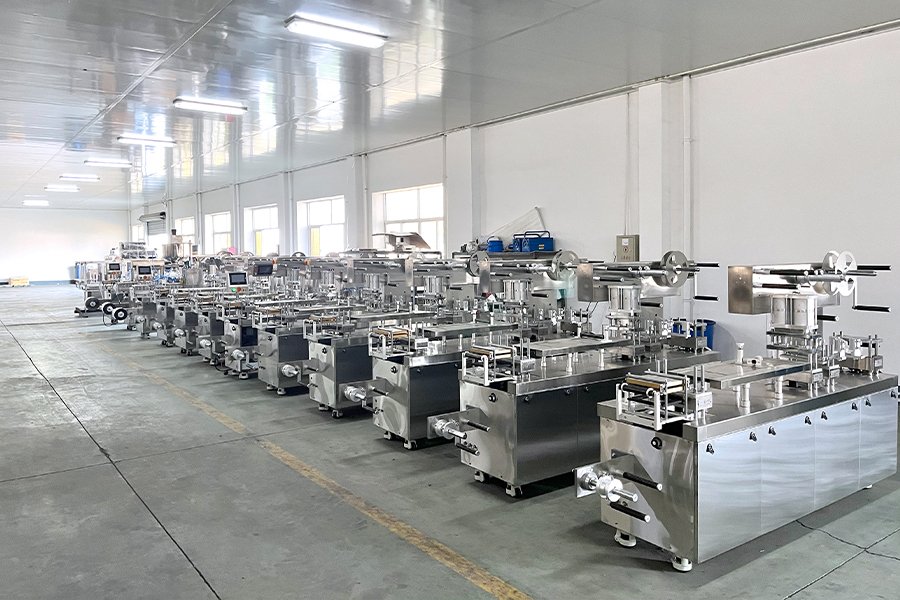
Welcome To Our Pharmaceutical Equipment Line Factory!




Why Choose Us
Specialized Factory
Economical Pricing Options
On-Time Delivery
Perfect Customer Service
Custom Solutions Available
Our technical experts are always ready to assist you in finding the perfect customized solution for your needs.